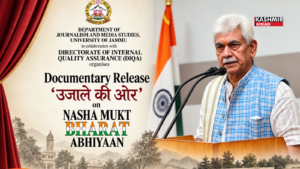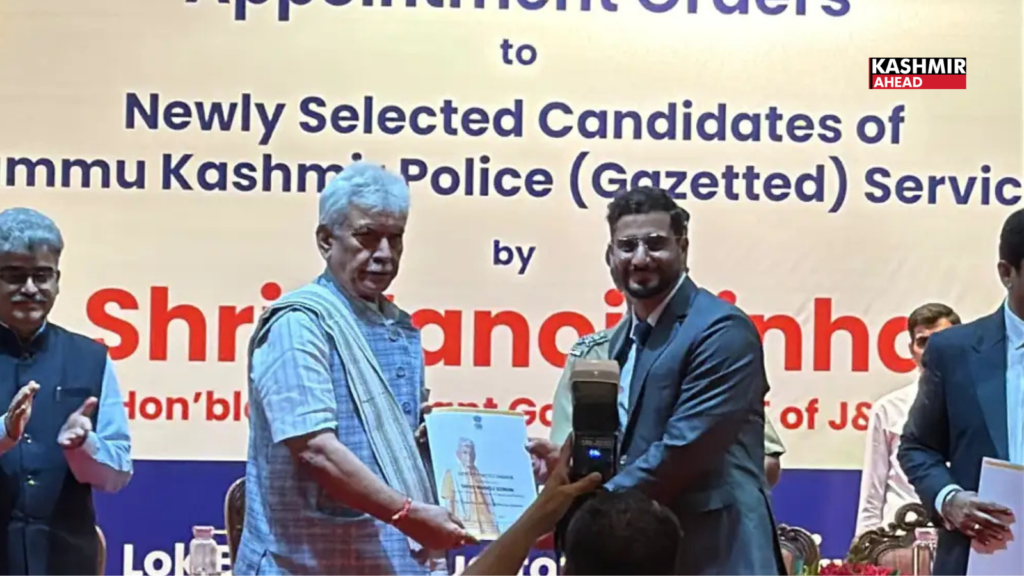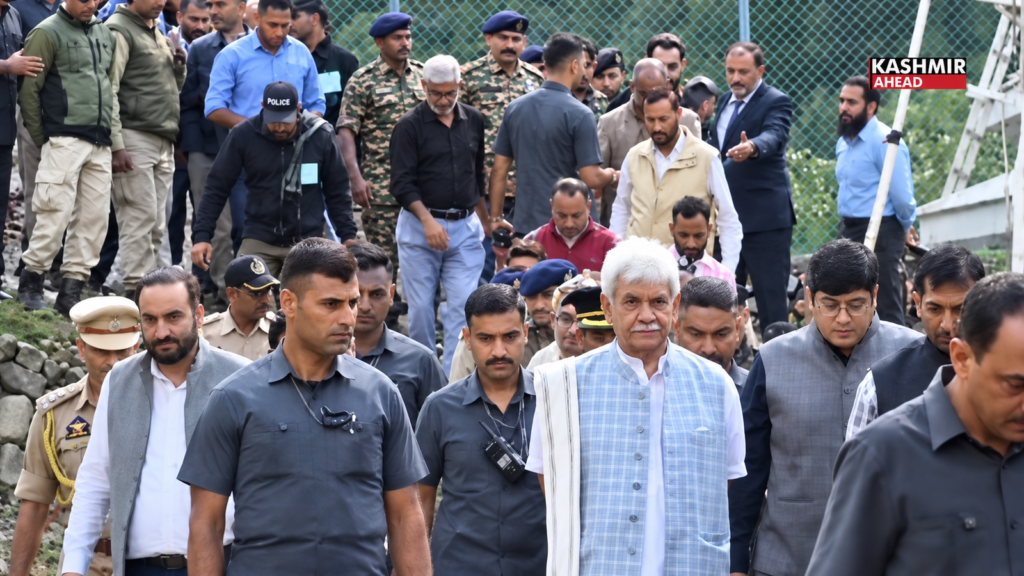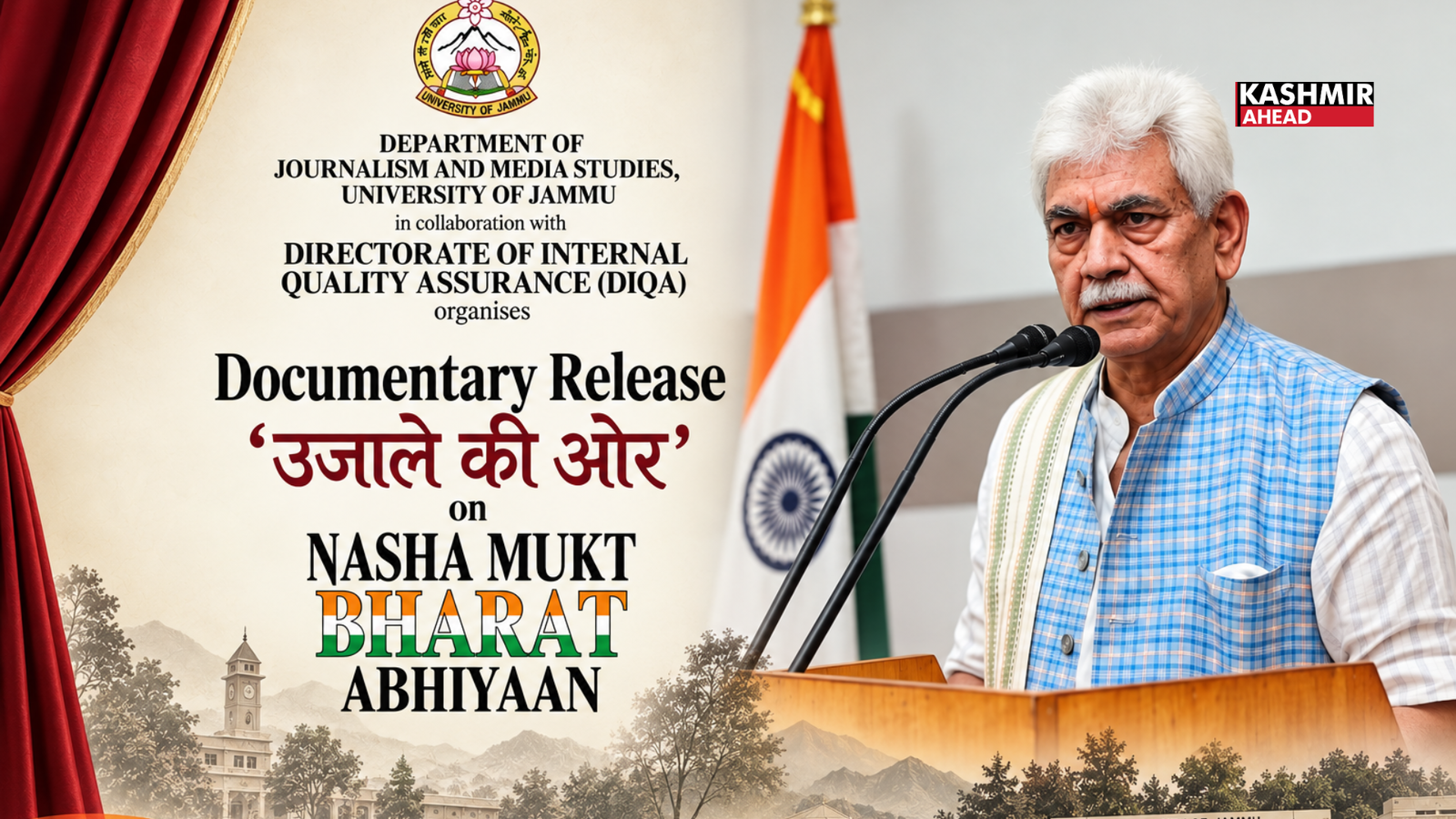
Kashmir, September 18,2026– Lieutenant Governor Manoj Sinha launched a documentary and collage exhibition under the Nasha Mukt Bharat Abhiyan (NMBA) at the University of Jammu, describing the initiative as a reflection of the collective resolve to fight drug abuse, dismantle supply chains, and rehabilitate those affected by addiction.
Speaking on the occasion, the Lieutenant Governor said the fight against substance abuse in Jammu and Kashmir has moved well beyond government offices and police stations, into every corner of society. “From villages to universities, women, youth clubs, teachers and civil society have joined hands to make Jammu and Kashmir drug-free,” he noted, calling this breadth of participation the true strength of the campaign.
A Campaign Built on Three Pillars
The Nasha Mukt Bharat Abhiyan, under the Lieutenant Governor’s leadership, has consistently rested on three pillars: enforcement, awareness, and rehabilitation. Today’s launch at the University of Jammu speaks directly to the latter two. The documentary presents real, human accounts of how addiction affects individuals and families, while the collage exhibition allows students and volunteers to express the urgency of the cause through art and imagery — a format designed to resonate with young audiences in ways that formal lectures often cannot.
The Lieutenant Governor emphasized that dismantling the drug supply chain, while essential, is only half the battle. “Education, awareness and compassion are our strongest weapons,” he said, underlining that lasting change comes not from punitive measures alone but from equipping young people with the knowledge to resist drugs in the first place, and from treating those already affected with the care needed to help them recover and reintegrate into society.
A Society-Wide Mobilisation
Since the 100-day Nasha Mukt Bharat Abhiyan was launched across Jammu and Kashmir under the Lieutenant Governor’s directive, the campaign has grown into one of the most wide-reaching social mobilisations the region has seen in recent years. Universities, including the University of Jammu and its offsite campuses in Bhaderwah, Poonch, Reasi, Kathua, Udhampur, Kishtwar, and Ramnagar, have organised pledge ceremonies, padyatras, street plays, and awareness drives. Women’s groups have brought a compassionate, community-rooted dimension to the campaign, while youth clubs and student bodies such as the NSS and NCC have driven ground-level engagement. Teachers have used classrooms as spaces for early intervention, and civil society organisations have stepped in to support rehabilitation and de-addiction efforts.
This coordinated approach, spanning government departments, educational institutions, and community organisations, reflects the Lieutenant Governor’s repeated call that the fight against drugs cannot be left to any single institution. It requires what he has described as a united societal response — one where families, schools, local communities, and administration all play a part.
A Call to Pledge and Protect
Concluding his remarks, the Lieutenant Governor issued a direct appeal to the people of Jammu and Kashmir. “Let us pledge to protect our youth, empower society, and build a healthier future,” he said, framing the fight against drug abuse not as a temporary campaign but as an ongoing responsibility for every citizen.
The documentary and collage exhibition launched today will serve as lasting tools for awareness generation, to be used across university campuses, schools, and community centres in the weeks ahead. As the Nasha Mukt Bharat Abhiyan continues its 100-day run and beyond, today’s event at the University of Jammu stands as a reminder that the fight against drug abuse is ultimately a fight for the future of the region’s youth — one that depends on the sustained participation of every section of society.