Srinagar, September 18,2026-Mushkbudji, Kashmir’s prized aromatic rice variety, is steadily gaining ground once again, with farmers across the Valley returning to its cultivation after years of decline, buoyed by its Geographical Indication (GI) tag and renewed institutional support aimed at reviving the traditional grain.
A Premium Grain with Deep Roots
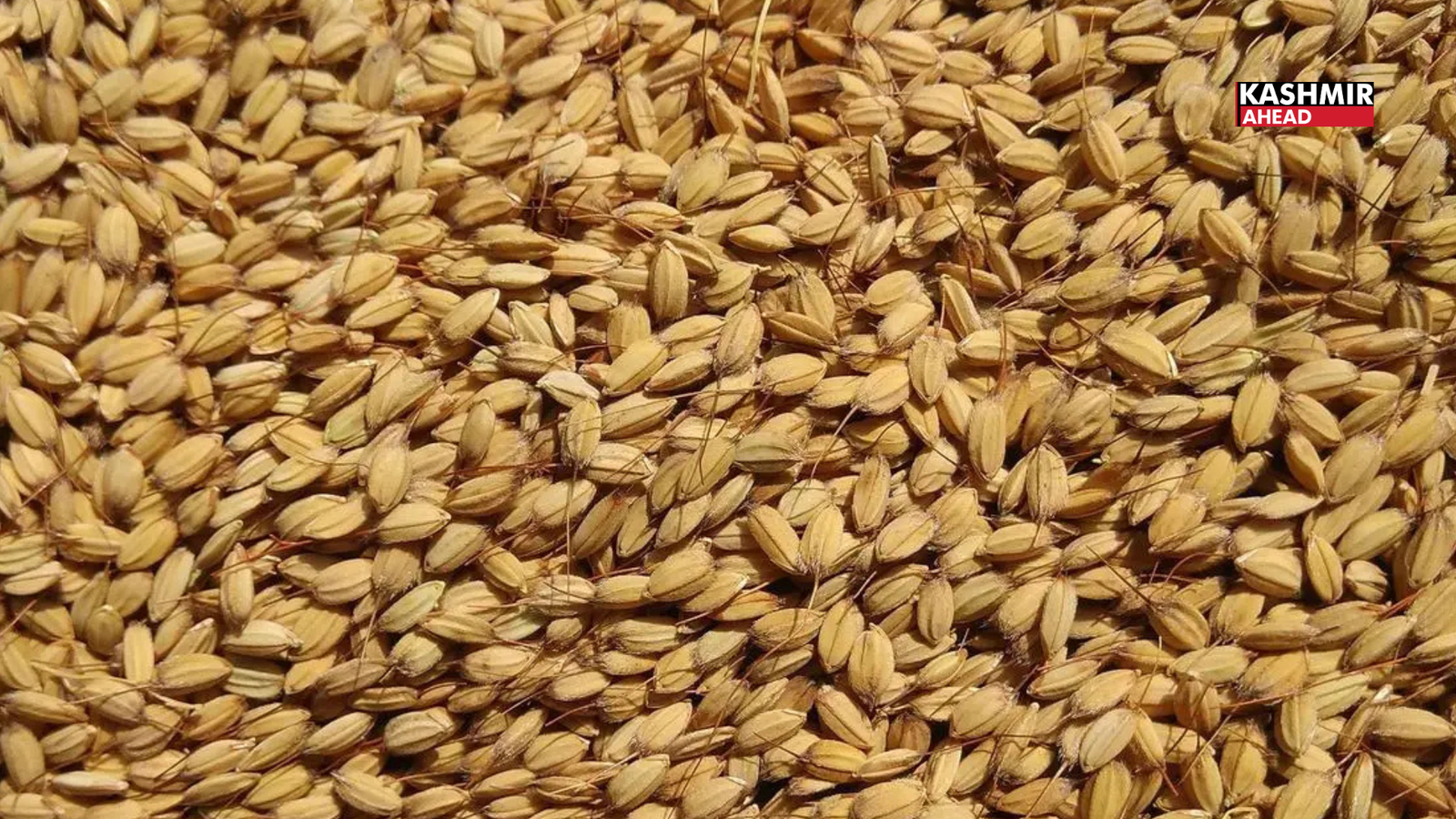
Mushkbudji is a premium, non-Basmati, short-grained aromatic rice native to the Kashmir Himalayas, traditionally grown at altitudes of 1,600 to 1,800 metres above sea level. Known for its short, bold, translucent, and highly aromatic grain, it is especially prized as the preferred rice for Wazwan, the Valley’s famed traditional feast, and has long held a special place in Kashmiri cuisine and culture.
The rice variety received its GI tag from the Geographical Indications Registry on July 31, 2023, following an application filed in June 2021 by the Sagam Mushqbudji Farmer Producer Company Limited, based in Tangpawa, Sagam, in Anantnag district. The recognition made Mushkbudji the first rice variety from Jammu and Kashmir, and the eleventh product overall from the region, to receive a GI tag, offering it legal protection and a unique regional identity in both domestic and international markets.
A Crop That Nearly Disappeared
Mushkbudji was cultivated on a large scale in Kashmir until the early 1990s, before its production suffered a significant setback with the introduction of exotic, higher-yielding rice varieties in the Valley. Over the following decades, many farmers gradually stopped growing Mushkbudji altogether, as frequent outbreaks of rice blast disease — a fungal infection capable of damaging all above-ground parts of the plant — made the crop increasingly risky and expensive to maintain.
Renewed Cultivation and Scientific Support
In recent years, the tide has begun to turn, with farmers slowly returning to Mushkbudji cultivation, supported by collaborative efforts between SKUAST-Kashmir, the Department of Agriculture, and local farming communities. Under a dedicated revival programme, the village of Sagam in the Kokarnag belt and surrounding areas were chosen for demonstration plots using purified Mushkbudji seed stock, helping popularise the variety among farmers across the Anantnag belt.
Scientists have also worked on developing improved cultivation techniques to address the crop’s vulnerability to blast disease. Farmers growing the improved variety now leave a wider gap of about one square foot between seedlings, compared to the traditional three-to-four-centimetre spacing, allowing greater sunlight penetration and improved soil heat retention — both of which help strengthen plant health and reduce blast infection.
Expansion Beyond Anantnag
While Mushkbudji has traditionally been most closely associated with Anantnag district, cultivation efforts are now being expanded to Budgam and Kulgam districts as well, as the Agriculture Department works to revive and spread the tradition more widely across the Valley. According to available data, Kashmir produced around 5,000 quintals of Mushkbudji rice over a recent three-year period, with production having grown steadily from just over 14 quintals in 2020 to more than 17 quintals in 2022 across the Anantnag, Ganderbal, and Baramulla belts.
Recognition and Rewards for Conservation
The conservation and revival of Mushkbudji has also been recognised at the national level, with the Protection of Plant Varieties and Farmers’ Rights Authority awarding the “Genome Saviour Community Award,” carrying a grant of Rs 10 lakh, in recognition of the farming community’s efforts to save and promote the traditional variety.
A Path Toward International Markets
With demand rising and cultivation areas expanding, officials have indicated that Mushkbudji is poised to enter international markets in the coming years. For farmers like those in Sagam and surrounding villages, the combination of GI protection, improved cultivation techniques, and growing market interest offers renewed confidence to expand production, with some already planning to grow the rice on a larger, more commercial scale.
As Mushkbudji continues its slow but steady comeback, the revival of this centuries-old Kashmiri grain stands as a model for how traditional agricultural heritage, when paired with scientific innovation and institutional support, can be preserved and strengthened for future generations.