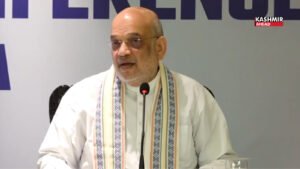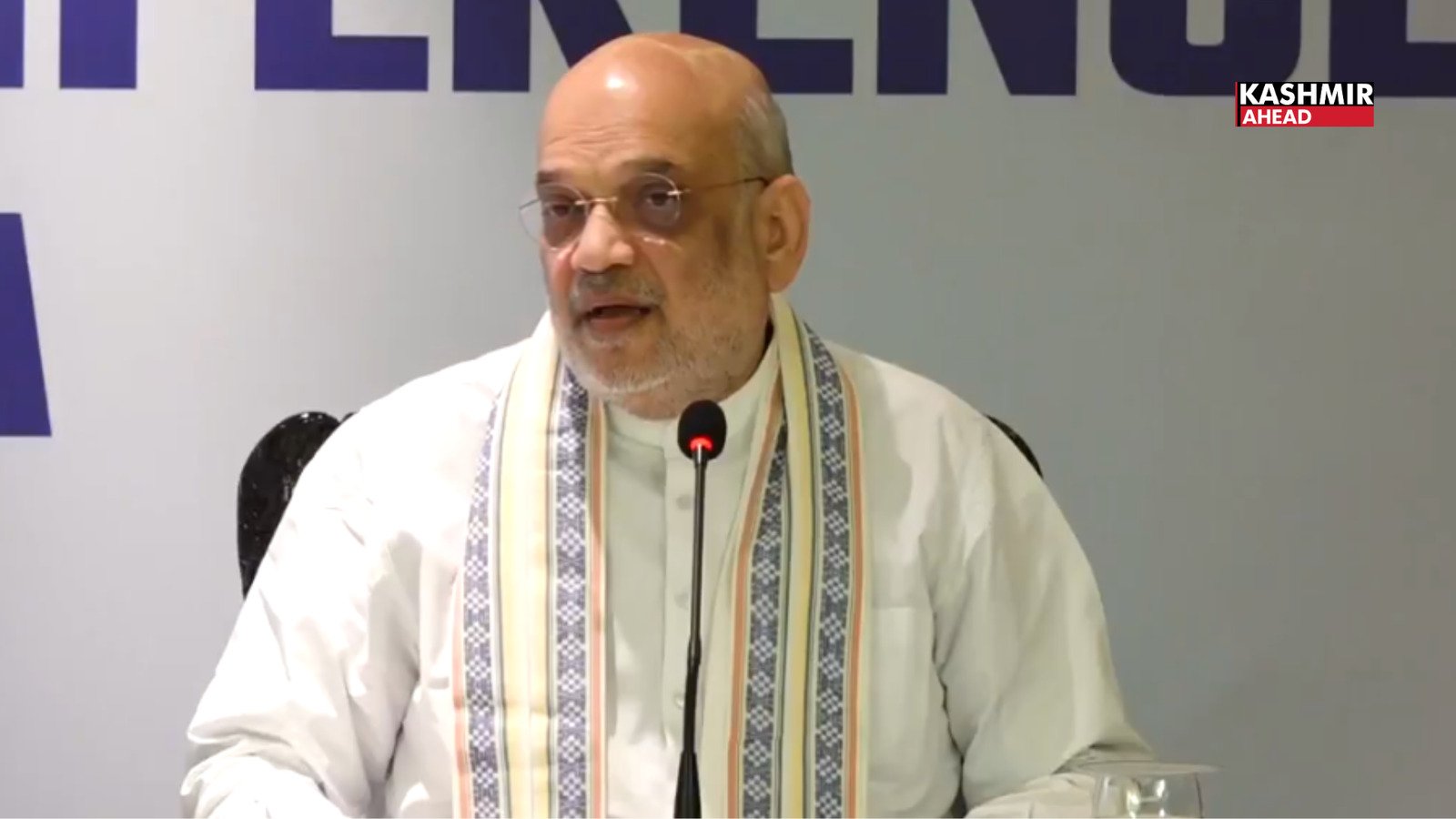
Kashmir, September 7,2026– Union Home Minister Amit Shah on Sunday announced that the Modi government has prepared a comprehensive roadmap to make India completely free from narcotics by 2029, describing the fight against drugs as a national priority under the leadership of Prime Minister Narendra Modi. Shah made the announcement while addressing a press conference in Goa during his three-day visit to the state.
A Three-Year Mission Mode Plan
Shah outlined a three-year roadmap running from July 2026 to July 2029, declaring the period a “mission mode” phase built on fixed timelines, ministry-wise accountability, measurable outcomes and quarterly reviews. The roadmap rests on four key pillars: intelligence- and operations-based enforcement, control of precursor and synthetic drugs, demand and harm reduction, and capacity building and coordination.
The Home Minister said the government has set ambitious targets for the coming three years, including dismantling 100 international and inter-state drug trafficking networks, bringing 100 narcotics-related fugitives back to India, and destroying 100 clandestine drug manufacturing laboratories.
Scaling Up Outreach and Rehabilitation
Under the ongoing Nasha Mukt Bharat Abhiyan, Shah said the campaign has already reached 25 crore citizens, who have been administered a pledge against drug use, while 5.7 lakh individuals have been made drug-free through treatment and rehabilitation programmes. Going forward, the campaign aims to reach 50 crore citizens and create one lakh “Nasha Mukt Mitras” — community volunteers tasked with spreading awareness at the grassroots level. Through platforms like the National Cadet Corps, National Service Scheme and My Bharat, lakhs of additional volunteers are expected to be mobilised for the campaign.
To support rehabilitation efforts, Shah said the number of de-addiction centres across the country will be tripled, rising to 1,751 facilities. Central assistance of 7 percent will also be provided to states to help establish fully equipped Anti-Narcotics Task Forces (ANTFs) in every state by March 2027.
Track Record and Institutional Framework
Shah highlighted the scale of enforcement action taken so far, noting that between 2014 and 2026, authorities seized narcotics weighing over 1.19 crore kilograms, valued at approximately Rs 1.89 lakh crore. He also said 274 fugitives have been extradited from 36 countries since 2019, while properties worth around Rs 17,874 crore belonging to fugitives have been seized or confiscated during the same period.
To ensure coordinated action across agencies, Shah pointed to the four-tier National Coordination Committee for Countering Drug Trafficking (NCORD) mechanism, established in 2019 and operating at the apex, executive, state and district levels. He noted that 10 apex-level meetings, 7 executive-level meetings, 277 state-level meetings and 16,798 district-level meetings of NCORD have been held so far, alongside international cooperation agreements signed with 46 countries.
Focus on Synthetic Drugs and Financial Investigations
Shah said special emphasis has been placed on financial investigations, including provisions under PIT-NDPS, along with dark-net and cryptocurrency-related probes tied to drug trafficking. A dedicated mechanism is also being developed specifically to tackle the growing challenge posed by synthetic drugs and precursor chemicals. He added that forensic reports related to narcotics cases will now be made available within 30 days, aimed at speeding up prosecutions.
A Message to Foreign Nationals
Addressing concerns around drug trafficking involving foreign nationals, Shah said India welcomes foreigners but not those who bring drugs into the country, indicating that a “Quadrangular Approach” is being adopted to strengthen enforcement along international routes and borders.
Vision for a Developed India
Shah reiterated that the broader objective is to build a drug-free youth population by 2047, aligning with the government’s vision of a “Viksit Bharat.” He said the initiative reflects a shift from earlier fragmented efforts toward a coordinated, nationwide strategy targeting every link in the narcotics supply chain — from trafficking and financing to rehabilitation and prevention. The press conference was held following a high-level meeting on narcotics in Panaji, attended by Goa Chief Minister Pramod Sawant and senior officials from the Ministry of Home Affairs and the state government.