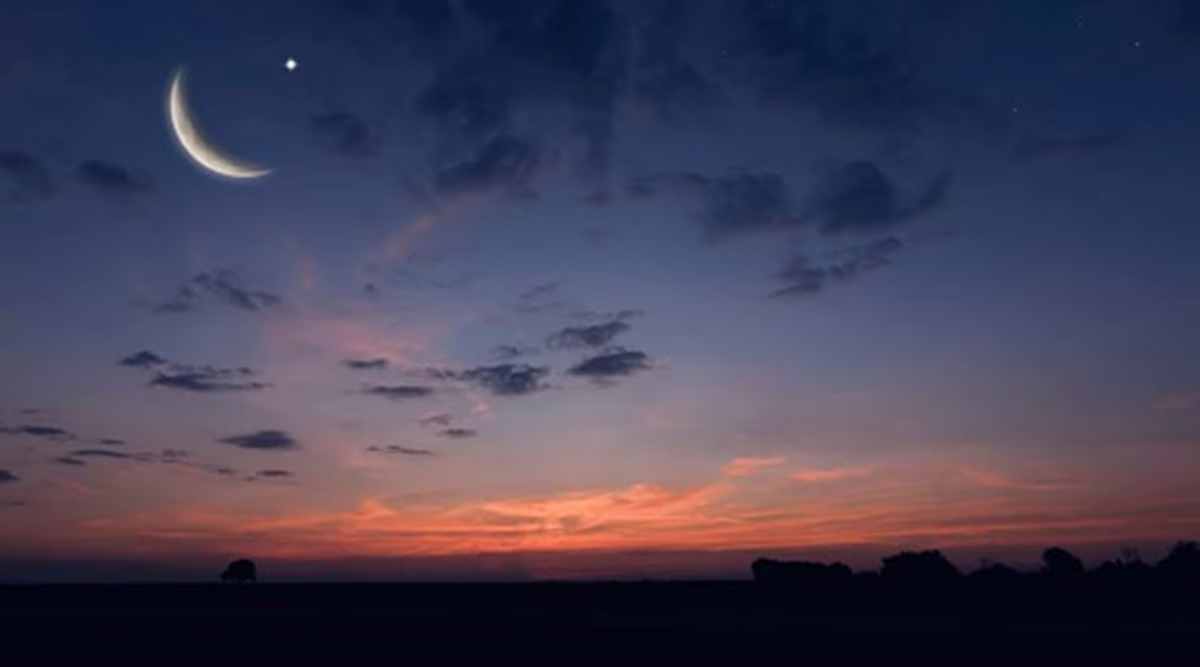
Srinagar, February 18,2026 – A slender crescent will soon rise over Kashmir, and with it an entire region will reset its clock, its kitchens, and its spirit in one shared act of faith. The sighting of the Ramadan moon will mark the beginning of the holy month for Muslims across the Valley, ushering in days of fasting, prayer, charity, and reflection.
Religious scholars and local moon-sighting committees are expected to convene after sunset to confirm the beginning of Ramadan. Once the crescent is sighted, mosques across Srinagar and other districts will announce the commencement of fasting, setting in motion a month-long spiritual journey observed with deep devotion.
During Ramadan, the daily routine in Kashmir undergoes a significant transformation. Families wake up before dawn for Sehri (pre-dawn meal) and break their fast at sunset with Iftar. Markets remain vibrant late into the night, as people shop for essentials, traditional delicacies, and prepare for communal prayers.
Prominent shrines and mosques, including the historic Jamia Masjid in Srinagar, witness large gatherings for special nightly prayers known as Taraweeh. The month also emphasises acts of charity, compassion, and community bonding, with many individuals contributing generously to help the underprivileged.
Authorities usually make arrangements to ensure smooth supply of essential commodities, regulate market prices, and maintain public services during the holy month. Security and traffic management plans are also reviewed to facilitate large congregational prayers, particularly on Fridays and during the last ten days of Ramadan.
As the crescent moon appears in the evening sky, it signals not just the start of fasting but a renewal of faith and unity across Kashmir. For many, Ramadan is a time of spiritual cleansing, self-discipline, and strengthened social harmony — a sacred period that binds the community together in prayer and purpose.