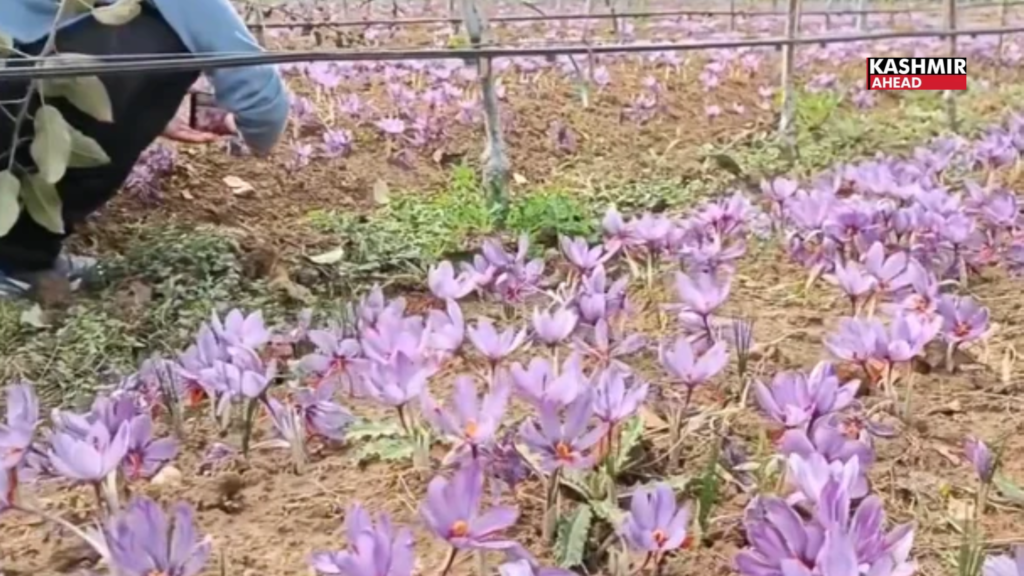
Kashmir, January 3,2025-The agricultural sector of Jammu & Kashmir remains the backbone of the region’s rural economy, with nearly 70 percent of the population dependent on agriculture and allied activities. Together, agriculture, horticulture, livestock, and fisheries contribute around 20 percent to the UT’s GDP, with crops accounting for 11–12 percent, livestock 5–6 percent, and fisheries less than 1 percent. Key products including apples, walnuts, saffron, rice, maize, and vegetables play a pivotal role in employment generation, state income, and food security.
Today, J&K agriculture stands at a crossroads, facing challenges from climate change, shrinking natural resources, and increasing market competition. To address these, the Union Territory is transitioning from traditional practices to science-led, innovation-driven farming, with technological interventions forming the foundation of agricultural development.
The state has strengthened research in crop improvement, seed development, soil health, water management, and climate-resilient agriculture, resulting in over 200 agricultural and horticultural technologies and varieties being developed or recommended. These innovations have led to a 15–30 percent increase in productivity. The Holistic Agricultural Development Programme (HADP) serves as a field-oriented platform connecting research directly with farmers. Priorities include strengthening seed research and multiplication chains to ensure 100 percent availability of advanced certified seeds, potentially adding Rs 8,000–15,000 per hectare to farmers’ income.
Focus on coarse grains and millets promotes nutritional security while reducing water and input requirements, benefiting rainfed areas. Mechanization, precision agriculture, sensor-based smart farming, and protected cultivation have improved resource-use efficiency by 20–25 percent, while polyhouses and high-tech greenhouses are doubling or tripling vegetable production. Scientific interventions in medicinal and aromatic plants offer income opportunities of Rs 1.5–3 lakh per hectare.
In the livestock sector, efforts aim to achieve self-sufficiency in fodder, mutton, and dairy production, addressing a current 40.93 percent fodder deficit. Scientific breeding, nutrition, and health management are strengthening productivity, while alternative farming systems and hydroponics are creating new income streams.
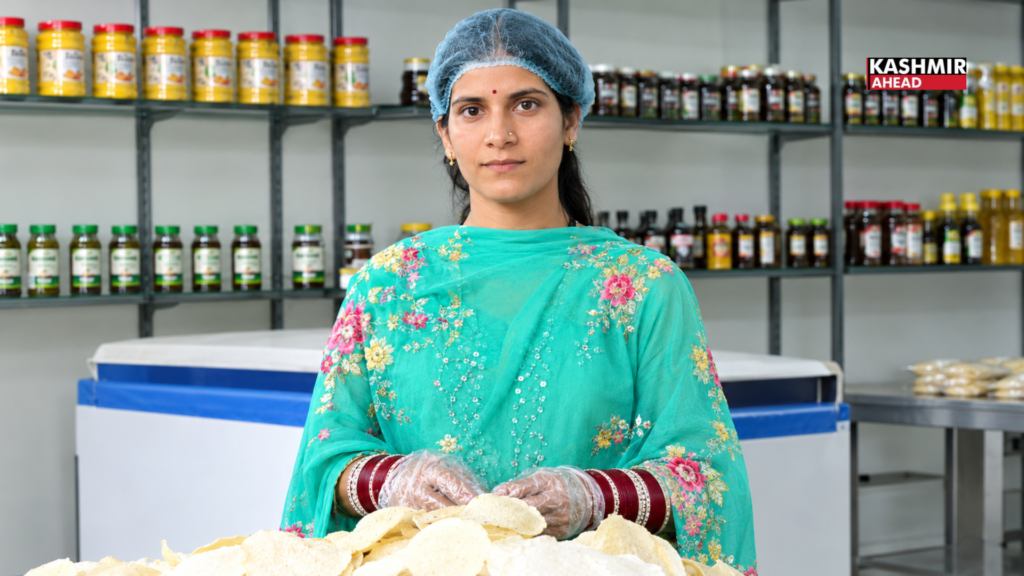
Agri-startups are emerging as powerful drivers of rural transformation in J&K. The region’s diverse agro-climatic conditions, rich biodiversity, and strong horticulture and livestock base provide opportunities in seed production, nurseries, precision farming, protected cultivation, agri-logistics, value addition, food processing, medicinal plants, and digital advisory platforms. Policies focusing on incubation support, credit facilitation, risk-sharing, and assured market linkages are crucial to support these startups.
Across India, states like Punjab, Haryana, Maharashtra, Karnataka, Tamil Nadu, and Himachal Pradesh demonstrate that quality-driven agriculture—through seed certification, residue monitoring, traceability, and compliance with standards such as GLOBALG.A.P.—can unlock premium markets and ensure farmer prosperity. J&K has a natural comparative advantage in apples, saffron, walnuts, vegetables, medicinal plants, and livestock, but failure to adhere to quality and residue standards can result in economic losses and export rejections.
To address this, J&K must focus on quality-driven agriculture in 2026, including strict seed and input regulation, residue-free production systems, laboratory strengthening, traceability platforms, and farmer training in Good Agricultural Practices (GAP). SKUAST Jammu plays a critical role in developing quality benchmarks, SOPs, residue management advisories, and certification-linked production models, guiding FPOs and startups to align with premium and export markets.
The convergence of the Holistic Agriculture Development Programme (HADP) and Jammu & Kashmir Competitiveness Improvement of Agriculture and Allied Sectors Project (JKCIP) is expected to further energise agriculture at the block level. HADP will focus on research-led interventions, seed systems, mechanisation, and diversification, while JKCIP will enhance competitiveness through value chains, post-harvest management, and institutional capacity building.
Jammu & Kashmir’s agriculture is thus entering a new era of resilience, competitiveness, and income-driven growth, powered by science, innovation, entrepreneurship, and policy convergence, promising sustainable livelihoods for farmers and youth alike.