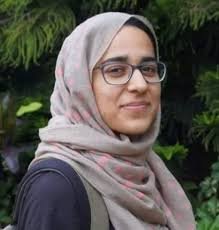
SRINAGAR, November 13,2025: On a misty morning in Srinagar, a group of women gather by the edge of a wetland — listening to birds, observing ripples, and taking notes. They are part of a nature education initiative led by Dr. Mehreen Khalil, a Kashmiri ecologist whose mission is to unite science and local communities in protecting the Valley’s fragile ecosystems.
A PhD in Ecological Sciences from the Indian Institute of Science, Bangalore, Dr. Mehreen returned to her homeland to redefine conservation — not as an academic pursuit, but as a community movement. In 2018, she founded the Wildlife Research and Conservation Foundation (WRCF) to bridge the gap between research, policy, and people’s participation.
“Conservation doesn’t start in labs or offices,” she says. “It starts in the hearts and hands of people who live closest to nature.”
Her journey began high in the Himalayas while studying Himalayan langurs, a rare primate species often mistaken by locals for mythical “Wan-mohniv” or forest beings. That early fieldwork taught her that saving wildlife depends on the wellbeing and involvement of the people who share their habitats.
Through WRCF, Dr. Mehreen has trained dozens of women in ecological literacy and leadership, turning household waste into compost, classrooms into nature labs, and awareness into action. Her programs emphasise that empowering women is key to sustainable environmental change in Jammu and Kashmir.
Dr. Mehreen highlights the alarming pace of ecological degradation in the region — J&K has lost nearly 57% of its wetlands in the last decade, and glacier cover has shrunk by 29% between 1980 and 2018. The Kolahoi Glacier, often called the “barometer of Kashmir’s climate,” has lost nearly a quarter of its mass.
“When wetlands disappear, it’s not just wildlife that suffers,” she explains. “It affects farming, water security, and livelihoods. Every ecosystem here is interlinked — and that’s what makes Kashmir’s biodiversity globally significant.”
Her foundation’s women-led programs teach waste management, wetland conservation, and sustainable farming — equipping participants to become local environmental leaders. Many graduates now lead awareness drives, school sessions, and village-level eco projects.
“Science gives you facts, activism gives those facts meaning,” Dr. Mehreen notes. “The best conservation outcomes happen when both work together.”
She also collaborates with national scientists, advises on biodiversity projects, and connects local initiatives to global environmental networks aligned with the UN Sustainable Development Goals (SDGs) — particularly SDG 4 (Quality Education), SDG 5 (Gender Equality), SDG 13 (Climate Action), and SDG 15 (Life on Land).
Looking ahead, Dr. Mehreen envisions a future where women are central to conservation in Kashmir. “By 2040,” she says, “I see wetlands restored, forests alive with birds, and women leading the way in environmental decision-making.”
Her story reflects a growing realisation that conservation in Kashmir is not just about saving nature — it’s about empowering people to protect the planet they call home.