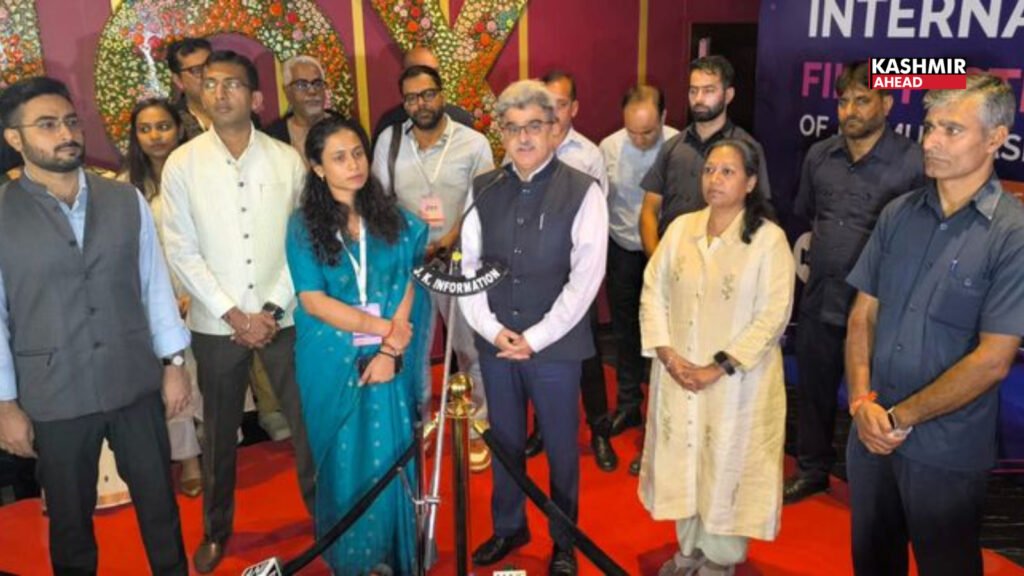
LG hails Army’s role in societal progress; felicitates women at Army Goodwill School Shopian The Indian Army, a steadfast guardian of India’s sovereignty, not only ensures the nation’s unity and integrity but also serves as a powerful force for societal transformation. Shri Manoj Sinha, Lieutenant Governor of Jammu and Kashmir, eloquently highlighted this dual role during a felicitation ceremony for women who completed their training at the Army Goodwill School in Balapur, Shopian. His praise underscores the Army’s remarkable ability to balance its primary security responsibilities with impactful community development initiatives, particularly in regions marked by conflict and socio-economic challenges.The Army’s core mission is to protect India’s territorial integrity, operating in some of the world’s most demanding environments, from the icy peaks of Siachen to the volatile borders of Jammu and Kashmir. In areas like Shopian, where security threats are prevalent, the Army’s presence is crucial in countering militancy and maintaining stability. Beyond external defense, it plays a vital role in internal security, conducting counterinsurgency operations and providing humanitarian aid during natural disasters like floods and earthquakes. These efforts, which save lives and restore order, have earned the Army widespread trust and admiration across the nation. Shri Manoj Sinha’s recognition of these contributions during the Shopian event emphasizes the Army’s indispensable role in safeguarding India’s unity.Equally significant is the Army’s commitment to societal progress through initiatives like the Army Goodwill Schools, established under Operation Sadbhavana. These schools provide education and vocational training to communities in remote and conflict-affected areas, empowering individuals to build brighter futures. The felicitation of women at the Balapur school, as acknowledged by Sinha, highlights the Army’s focus on uplifting marginalized groups. By equipping women with skills, the Army promotes gender equality, economic independence, and social cohesion in regions like Jammu and Kashmir, where historical unrest and limited opportunities have posed significant challenges. These programs enable women to support their families, challenge societal norms, and inspire future generations, creating a ripple effect of positive change. The Army’s efforts extend beyond education to include healthcare camps, infrastructure projects, and youth engagement programs, all designed to address local needs and foster trust. In conflict-prone areas, these initiatives counter radicalization by offering hope and opportunity, demonstrating that security and development are interconnected. Sinha’s presence at the felicitation ceremony underscores the government’s support for these efforts, signaling their importance in India’s broader vision of inclusive growth.Despite its achievements, the Army faces challenges in sustaining these initiatives, including limited resources and the complexity of operating in volatile regions. Yet, its resilience and dedication enable it to overcome these obstacles. To enhance its impact, the Army could collaborate with civil society, educational institutions, and government bodies under leaders like Shri Manoj Sinha to expand programs like the Army Goodwill Schools. Integrating digital education and sustainable development could further amplify their reach and effectiveness.In conclusion, the Indian Army, as praised by Shri Manoj Sinha, is both a protector of India’s unity and a catalyst for societal transformation. Through initiatives like the Army Goodwill School in Balapur, Shopian, it empowers communities, particularly women, to drive progress in challenging regions. By balancing security and development, the Army is building a stronger, more inclusive India, leaving a lasting legacy of hope and opportunity.